Award-Winning Service.
Expect More From Massey Services
Since 1985, Massey Services has earned the trust of thousands through exceptional service and reliable results.
Why Professional Termite Control is Essential
Termites cause an estimated $5 billion in damage across the United States each year. The worst part? Most homeowners insurance policies do not cover termite damage, leaving you to handle costly repairs on your own. The reality is, it’s not a matter of IF termites will invade your home—it’s WHEN. Our comprehensive termite control will help ensure your home is protected from all types of termites, including subterranean termites, drywood termites and other wood destroying insects. Best of all, our Termite Control Programs are all backed by one of the strongest guarantees in the industry.
Our professional termite control services provide comprehensive termite protection to safeguard your home from subterranean termites, drywood termites, Formosan subterranean termites and other wood-destroying insects. With our expert treatment plans, you can ensure long-term protection and peace of mind.
Best of all, our Termite Control Programs come with one of the strongest guarantees in the industry, so you can trust that your home is secure. Don’t wait until termites cause costly damage—invest in professional termite control and protection today!
What Do Termites Look Like?
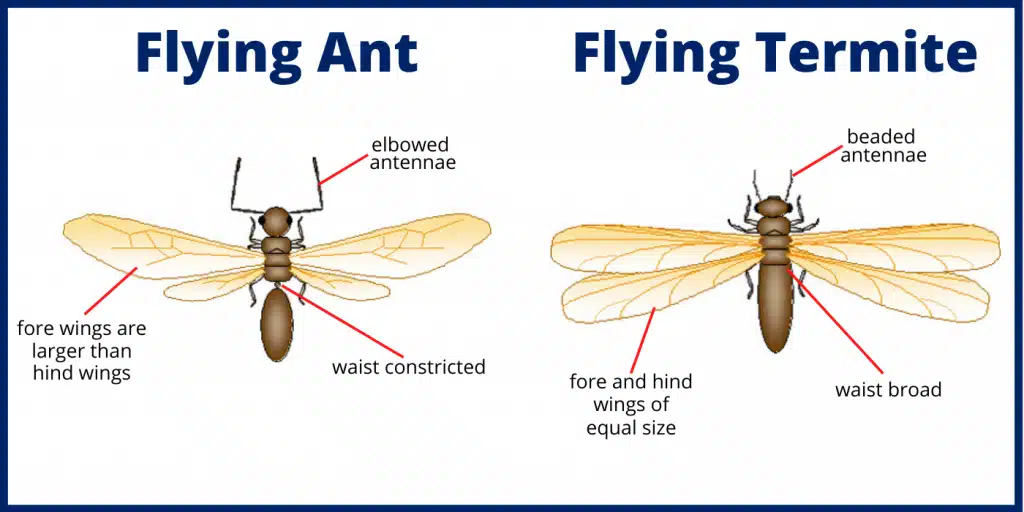
Termites vary in appearance, but in the U.S., the main types are subterranean and drywood. All produce winged swarmers that leave to start new colonies—often mistaken for flying ants but distinguishable by key features.
Wings: Termites have two pairs of wings that are nearly identical in size and extend twice the length of their body. In contrast, ants have wings of different sizes, with the front pair being slightly longer than their body.
Antennae: Termites have straight, beaded antennae, while ants have elbowed antennae.
Waist: Ants have a constricted or “pinched” waist, creating distinct body segments, whereas termites have a broad, uniform waist with no clear segmentation.
Click the boxes below to learn more about some of the most common types of termites that pose the biggest risk to your home:
Subterranean termites are the most common type of termite to infest homes in the United States. As their name suggests, they attack homes from underground,...
Formosan termites are arguably the most dangerous type of termite to invade a home. These termites devour wood 24/7, and colonies may include upward of...
Drywood termites swarm and enter your home through cracks, unscreened soffits and gable vents. Drywood termites are a danger to any wood in your home,...
Click the boxes below to view common signs of termite damage and infestation:
Drywood termites excrete pellets that are kicked out of holes. These pellets often accumulate in piles on windowsills, baseboards and under wooden objects.
Powder post beetles leave evidence of their presence with piles of a fine, talc-like powder around furniture, flooring and any wooded items in the structure.
Schedule Your Free Inspection
Comprehensive & FREE Termite Inspection for Your Home
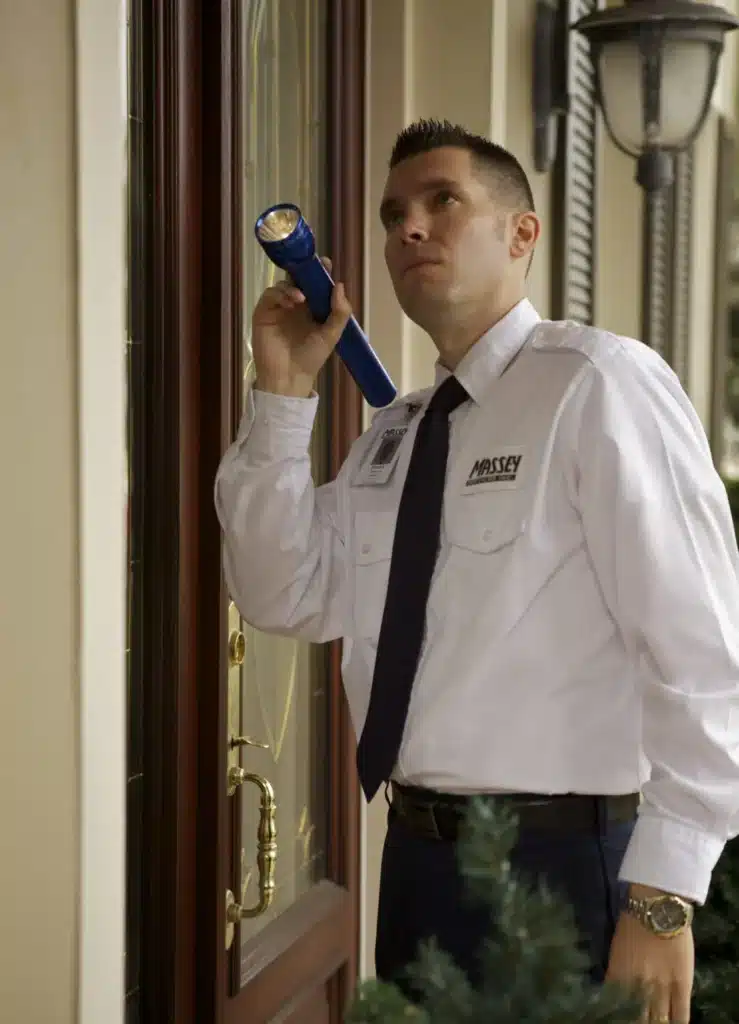
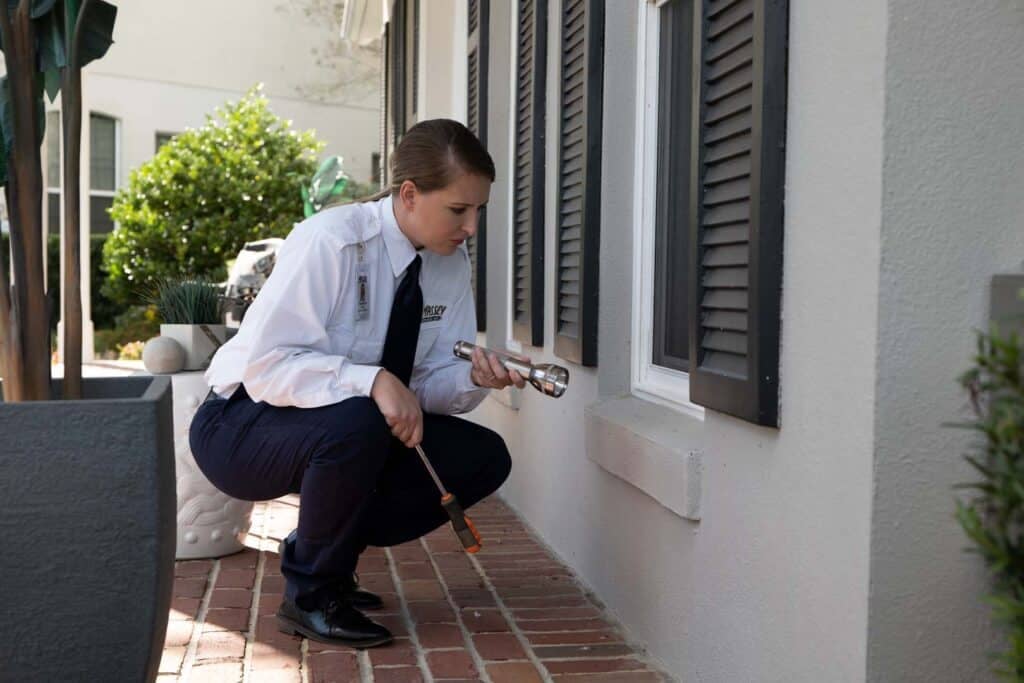
Protect your home from costly termite damage with our free termite inspection. Our certified termite control specialists conduct a thorough interior and exterior inspection,identifyingcurrent infestations, hidden damage, and future risks.
Expert Termite Inspection Process
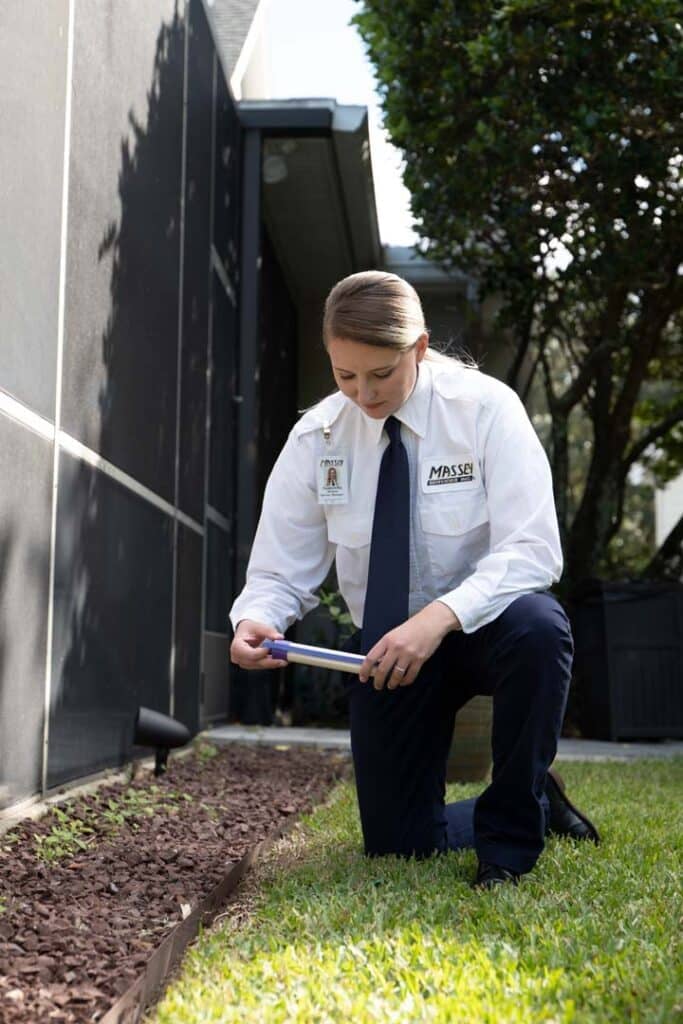
Our professional termite inspection covers your entire home and surrounding property, with a focus on:
✅ High-risk areas for termite activity
✅ Common entry points where termites invade
✅ Early warning signs to prevent infestations before they start
Custom Termite Control Solutions
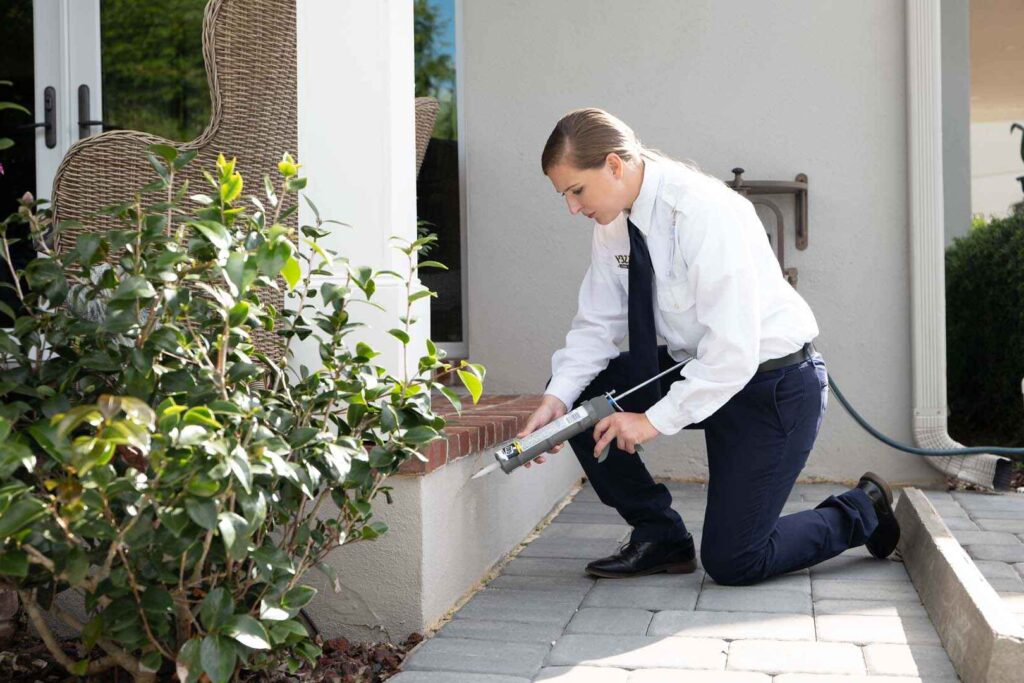
After the inspection, we provide a personalized termite treatment plan tailored to your home’s needs. Our expert technicians use advanced, environmentally responsible termite treatments to eliminate infestations and protect your property from future damage.
Ongoing Termite Prevention & Annual Inspections
All of our termite protection plans include annual termite inspections to detect any new activity. Our specialists will re-inspect your home inside, outside, over and under to ensure
your property remains protected from termites year after year.
Schedule Your Free Termite Inspection Today! Don’t wait for termites to cause costly damage—contact us now for expert termite control services and long-term protection.
Massey’s No-Nonsense, Money Back Guarantee of your complete satisfaction!
Satisfaction Guaranteed … or Your Money Back!
Our No-Nonsense Money-Back Guarantee ensures your peace of mind. If you see any pest activity between treatments, we promise a 24-hour response time to treat the problem and at no additional charge. After 30 days, if you aren’t satisfied with our pest services for any reason, we’ll provide additional treatments at no cost to you or refund your last service payment.
Why Choose Our Termite Control Services?
Proven, long-lasting termite protection
Customized treatments tailored to your home
Effective solutions
Unlimited guarantee that includes retreatment and repair of any new damage and covers both the structure and the contents of your home
Our Termite Control Guarantee
Massey’s Termite Guarantee is one of the best in the industry.
Here’s what’s included:
We cover the cost of repairing any NEW termite or wood destroying insect damage with an unlimited retreatment and repair guarantee.
We cover the structure AND contents of your home.
We inspect your property every year, not just the first year.
We allow you to transfer your termite protection when you sell your home.
If a termite problem emerges, we keep coming back until it’s completely solved…at no additional cost.
Frequently Asked Questions
What is termite protection and why is it important for homeowners?
Termite protection refers to specialized termite control services designed to protect your home from structural damage caused by termites. Termite protection often includes either a liquid termiticide treatment or strategically placed bait stations around the home’s foundation.
These services are part of a termite protection plan, which should also include routine inspections and preventive treatments. Many of these plans come with a termite bond—a contractual agreement that includes ongoing monitoring and covers any new damage caused by termites while under the agreement.
Do homeowners really need termite protection?
Absolutely. Termite damage is a widespread issue across nearly all of the U.S. Without termite protection, homeowners risk significant out-of-pocket expenses from termite-related damage. A professional termite protection plan helps ensure the structural integrity of your home, often saving you thousands of dollars by preventing issues before they start.
How much damage can termites cause and how quickly?
The extent of termite damage depends largely on the size and maturity of the colony. A small colony of 60,000 termites can consume approximately one square foot of wood in about a month, but that’s just the beginning. Moderate to large colonies, which may include millions of termites, can cause severe structural damage in two to three years or less. In extreme cases, large colonies can render a home uninhabitable in under two years. Because termite damage can go unnoticed until it's extensive, it’s much more cost-effective to prevent it than to repair it.
How much does termite control cost?
The cost of termite control services varies depending on your property’s size and the type of treatment used. While preventive services are typically affordable, the cost to repair termite damage can easily climb into the tens of thousands. Investing in proactive termite protection through Massey Services now can save you from major headaches and unexpected costs in the future.
Can I handle termite control myself, or should I call a professional?
While DIY termite treatments exist, they often fall short of providing the long-term protection your home requires. A professional termite inspection from Massey Services identifies not just the presence of termites, but also the environmental factors that may invite future infestations. Our experts recommend the best treatment plan based on your home’s layout and the local termite species. This professional guidance—backed by our unbeatable guarantee—offers far greater peace of mind than any store-bought solution.
What’s the best method for termite control?
The most effective termite control depends on the species of termite and the unique construction of your home. That’s why we begin every service with a free inspection. Based on our findings, we may recommend liquid treatments, bait stations, or a combination of both—always customized to give you the strongest defense against termites.
Is termite protection really necessary?
Yes, it’s absolutely necessary. Termites often work silently, and by the time their presence is discovered, the damage is usually significant. Regular inspections and proactive treatments with a comprehensive guarantee are your best defense against costly repairs and future infestations.
Our Service Regions for Termite Control & More!
We provide pest control, termite control, and landscape services throughout the southern and southeastern United States. With nearly 3,000 Team Members at more than 190 service centers, we are ready to protect your home with the best termite control in the industry.